Heading 1
Heading 2
Heading 3
Heading 4
Heading 5
Heading 6
Lorem ipsum dolor sit amet, consectetur adipiscing elit, sed do eiusmod tempor incididunt ut labore et dolore magna aliqua. Ut enim ad minim veniam, quis nostrud exercitation ullamco laboris nisi ut aliquip ex ea commodo consequat. Duis aute irure dolor in reprehenderit in voluptate velit esse cillum dolore eu fugiat nulla pariatur.
Block quote
Ordered list
- Item 1
- Item 2
- Item 3
Unordered list
- Item A
- Item B
- Item C
Bold text
Emphasis
Superscript
Subscript
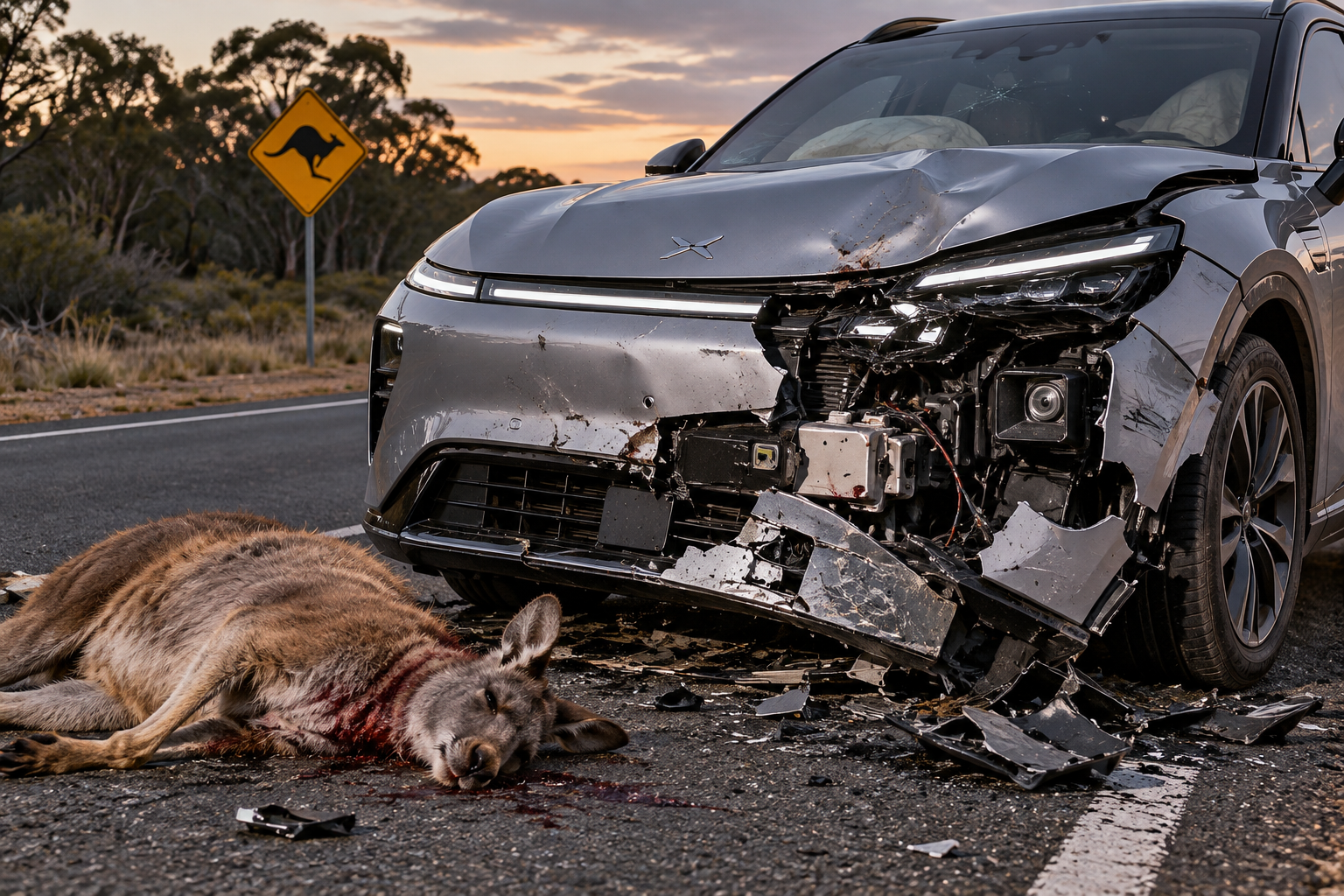
Kangaroo strikes are common. NRMA Insurance received more than 15,000 animal collision claims in 2025, and kangaroos made up 84% of them (Insurance Business, Sept 2026). Bushland edges, vineyards and semi-rural roads put Hunter drivers right in that risk zone, especially at dawn and dusk.
The XPeng G6 carries 12 cameras, 12 ultrasonic sensors and five millimetre-wave radar units for its XPILOT driver-assistance system (CarExpert). Those sensors run features like autonomous emergency braking, adaptive cruise and lane keeping. A sensor knocked even a degree or two off its aim can still switch on, but it may read the road wrongly.
This guide covers what a roo strike can do to your XPeng's sensors, what to do at the roadside, and how to get it repaired properly in the Hunter.
Where a kangaroo hits, and which sensors sit there
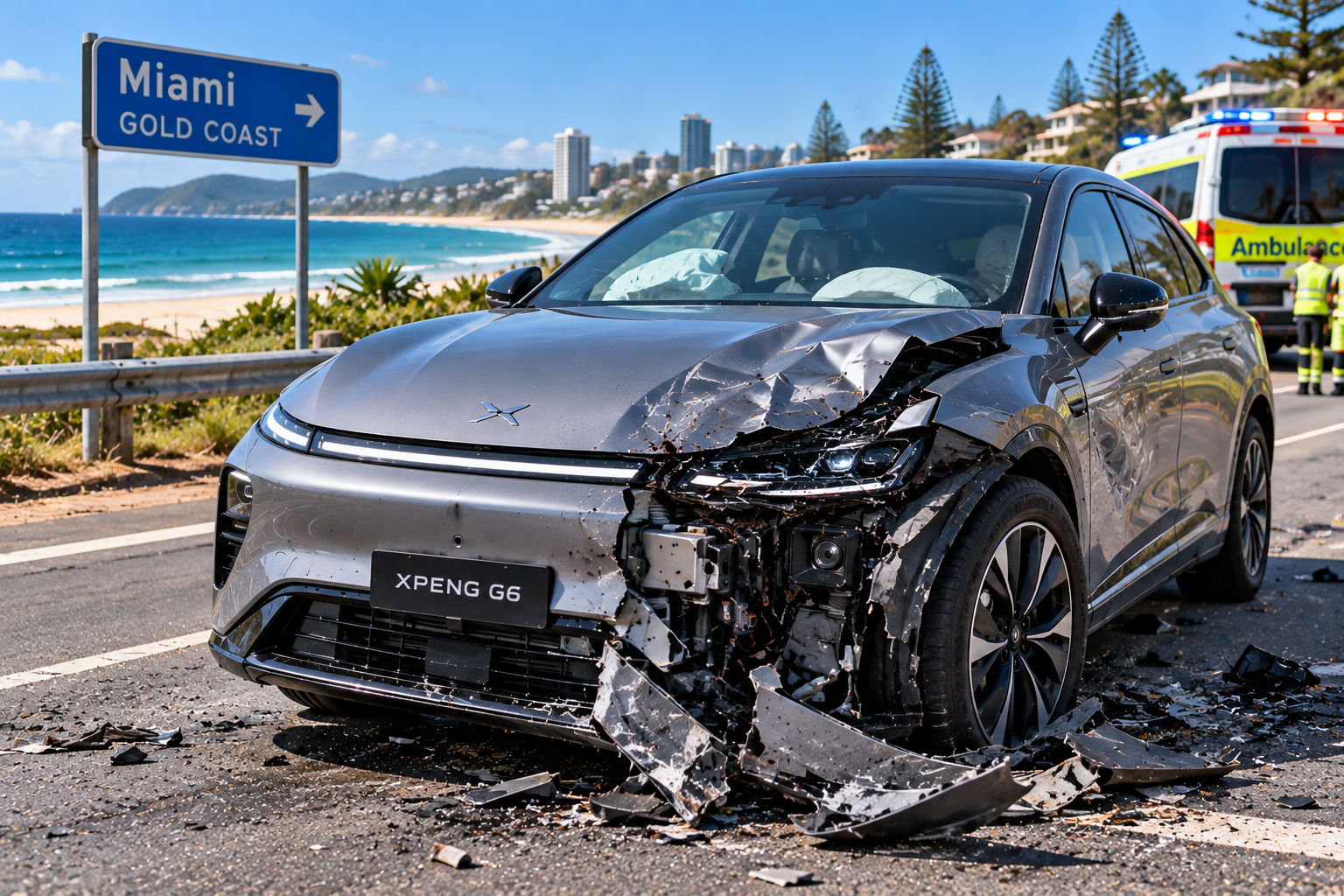
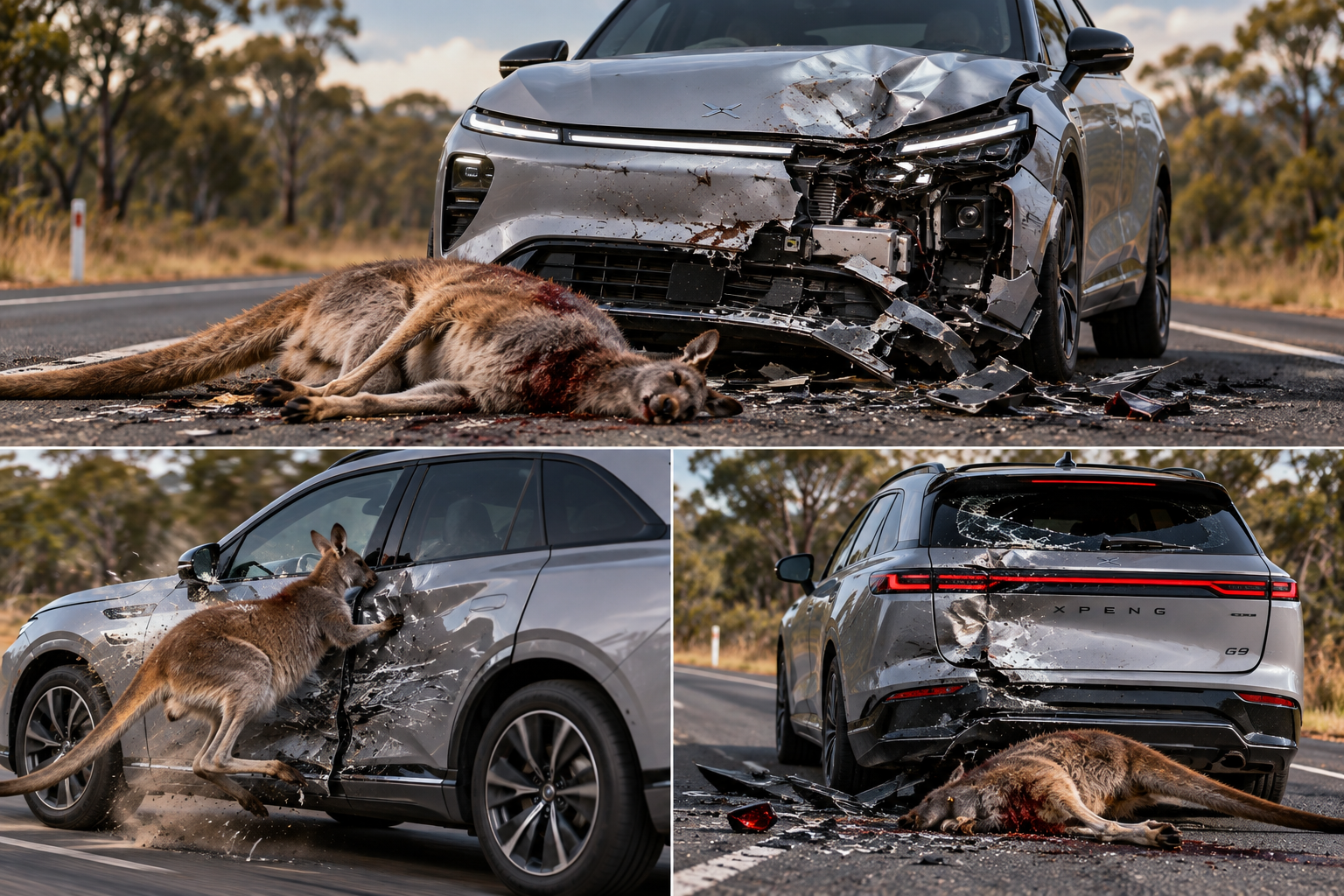
Most roo strikes land on the front of the car: the bumper, a front corner or, if the animal comes up off the road, the bonnet and windscreen. Here is what usually lives in each zone on an XPeng, and the warning signs to look for.
Centre of the front bumper and grille
This is where the front radar sits, which runs emergency braking and adaptive cruise. The front ultrasonic parking sensors and the front 360° camera are here too.
Warning signs: adaptive cruise won't turn on, a “radar blocked” or emergency braking warning appears, or the parking sensors beep constantly.
Front bumper corner
The corners hold radar units for blind-spot and cross-traffic alerts, more ultrasonic sensors and the headlight unit.
Warning signs: blind-spot or cross-traffic warning faults, or a headlight that points the wrong way or fogs up inside.
Bonnet and windscreen
The forward-facing camera behind the windscreen handles lane keeping and traffic-sign recognition. The bonnet latch and hinges also take the hit when a roo comes up off the road.
Warning signs: lane-keep or sign-recognition warnings, or cracked glass in front of the camera.
Under the front of the car
Cooling lines, underbody shields and, on some models, the front of the battery protection sit low enough to be hit.
Warning signs: fluid on the ground, scraping noises, or a high-voltage or temperature warning.
A crack in the windscreen right in front of the camera matters more than one at the bottom corner. If the glass needs replacing, the camera must be recalibrated afterwards — see our windscreen replacement service.
What to do at the roadside
- Pull over safely and switch on your hazard lights. Stay well off the road — Hunter highways carry heavy trucks at night.
- Check everyone in the car. Call 000 if anyone is hurt.
- Don't approach the kangaroo. An injured roo can kick hard. Call WIRES on 1300 094 737 (24/7). WIRES also asks drivers to check the pouch if it is safe, because joeys can survive a collision (WIRES).
- Call the police if needed. In NSW, police should be told when there is significant damage or the animal is a hazard to traffic (NRMA).
- Photograph everything. Take the car from all four corners, close-ups of the damage, the road and any warning lights on the dash. Your insurer will want these.
- Read the dashboard before you drive off. Note any ADAS, radar, camera or high-voltage warnings.
Is it safe to keep driving your XPeng?
If any of these show up, don't drive it — book EV-safe towing instead:
- A high-voltage, battery or thermal warning
- Fluid leaking under the front of the car
- A headlight that doesn't work or points the wrong way at night
- Damage that stops the bonnet closing or blocks the windscreen view
- The car won't go into drive, or the steering pulls hard
An XPeng should go on a flatbed, not be towed with its wheels on the road. If the car seems to drive normally, still treat its driver-assistance features as unreliable until they are checked. Don't rely on adaptive cruise or lane keeping on the drive home.
Hidden damage a quick look won't show
A large kangaroo can weigh as much as an adult person, and the impact is spread over the softest part of the car's front. The plastic bumper cover often springs back into shape, hiding what happened behind it:
- Bent sensor brackets. The radar can be pushed out of alignment while its cover looks fine.
- Cracked bumper reinforcement or crash absorbers. These are built to crush once and must be replaced.
- Damaged wiring and connectors behind the bumper, which can cause warnings that come and go.
- Moved mounting points. Even small shifts in the front structure change where sensors point.
- Cooling system damage. EVs rely on coolant to manage battery and motor temperature, and front radiators sit right behind the grille.
The only way to find these is to remove the bumper and inspect behind it. That's the first step in any proper roo-strike repair.
Why ADAS recalibration isn't optional
Your XPeng's emergency braking and adaptive cruise rely on the front radar knowing exactly where “straight ahead” is. If the radar or its bracket moves, the system can brake late, brake for no reason, or lose track of the car in front.
After a roo strike, recalibration is needed if:
- the front bumper, grille or a radar bracket was removed or replaced
- the windscreen was replaced
- the front structure was straightened on a measuring bench
- wheel alignment changed, because the cameras and radar use the car's driving line as a reference
Recalibration uses targets set up to factory measurements, followed by a road test. Skipping it to save time is a safety risk and can cause problems with your insurer if something goes wrong later.
Will insurance cover a kangaroo collision in NSW?
Usually, if you have comprehensive cover. Animal collisions are normally claimed under comprehensive car insurance. Your NSW green slip (CTP) covers injuries to people, not damage to your car, and third-party property cover generally won't pay for hitting an animal.
Check your policy for:
- The excess. Some policies treat animal collisions differently, so ask your insurer.
- Choice of repairer. Many comprehensive policies let you choose your own repairer. If yours does, you can ask for your XPeng to come to our Belmont workshop.
- Hire car cover. Check whether your policy includes a car while yours is off the road.
We deal with NRMA, AAMI, GIO, Allianz and other major insurers every day, and we handle the paperwork for you.
How we repair roo damage at our Belmont workshop
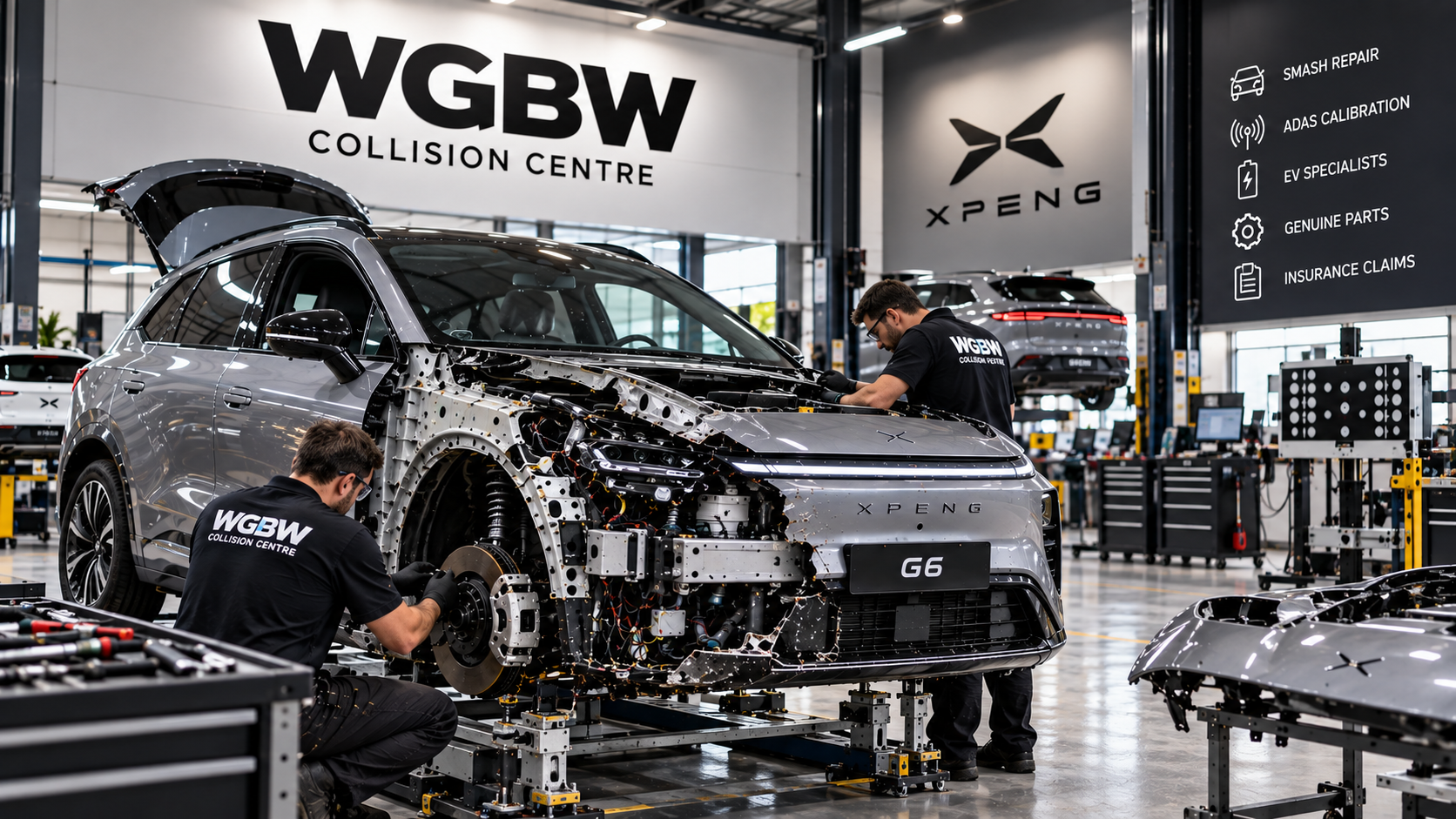
Our Belmont workshop at Unit 1, 26 Bluebell St is a short drive from Newcastle, Charlestown, Warners Bay and the rest of Lake Macquarie. For XPeng smash repair in Belmont NSW, we follow the same process on every car:
- Make the battery safe. The high-voltage system is isolated and tested before any work starts.
- Strip and inspect. We remove the bumper to find hidden damage, then agree the repair plan with your insurer.
- Measure the structure. The car goes on a computerised measuring bench and is brought back within XPeng's tolerances.
- Replace and paint. Damaged parts are replaced to XPeng's specification, and paint is colour-matched in a temperature-controlled booth.
- Recalibrate and test. Every affected camera and radar is recalibrated, then the car is road-tested before handover.
While we fix your car, eligible customers get a replacement car for the length of the repair. Every repair carries a lifetime workmanship guarantee. Our technicians use the same high-voltage training and tooling we rely on as an approved EV collision centre.
If the strike was more serious — airbags deployed or the front structure badly crushed — read Can an XPeng be repaired after a major accident? For general crash damage on other vehicles, see our collision repairs page.
Lowering your risk on Hunter roads
Kangaroos are most active at dawn, dusk and night, when many Hunter drivers are commuting to the mines, vineyards or Newcastle.
- Slow down at dawn and dusk, especially on roads that pass bushland, farmland or vineyards.
- Watch for more than one. Kangaroos often move in groups, so another may follow the first.
- Brake firmly in a straight line. Swerving at speed can roll a car or put you into oncoming traffic, which is usually worse than hitting the animal.
- Use high beam where it's safe. It gives you more warning of eyes at the roadside.
- Don't treat your XPeng's emergency braking as a backup. It helps, but a kangaroo can leap into your path faster than any system can react.
Kangaroo strike FAQs
Can I drive my XPeng after hitting a kangaroo?
Only if there are no high-voltage, battery or fluid warnings, the lights work and nothing is hanging off. Even then, treat adaptive cruise and lane keeping as unreliable until the sensors are checked. If in doubt, arrange EV-safe towing.
My XPeng looks fine after a small roo hit. Does it still need checking?
Yes. Bumper covers often spring back while the radar bracket or crash absorbers behind them are damaged. A misaligned radar can affect emergency braking without showing a warning.
Does the radar need recalibrating if only the bumper is replaced?
Yes. Removing or replacing the bumper disturbs the radar and parking sensors, so they need to be recalibrated to factory settings.
Will my insurer pay for ADAS recalibration?
In most comprehensive claims, recalibration is part of the repair cost when the damage affected the sensors. We include it in the quote we send your insurer.
Where can I get an XPeng repaired after a kangaroo strike in the Hunter?
Our Belmont workshop on Lake Macquarie repairs the XPeng G6, P7 and G9 for drivers across Newcastle, Lake Macquarie and the Hunter, including towing, insurance claims and sensor recalibration.
Hit a roo? Call our Belmont team
We'll arrange the tow, deal with your insurer and get your XPeng's sensors working properly again. Call (02) 4945 2598 or get a free quote online.
Learn more about our XPeng collision repairs for Newcastle and Lake Macquarie.